





Operation Nightingale
Operation Nightingale uses archaeology to help the recovery of service personnel returned from military tours, and has expanded to include veterans and army widows.

|
| The team’s work showed where military training could be carried out in the lost village of Imber on Salisbury Plain. |
In 2011 heritage professionals within the Ministry of Defence (MOD) established a programme called Operation Nightingale to use archaeology in aiding the recovery of service personnel returned from military tours. Since then, the project and a number of the veterans have gone on to study the subject at university or to work as professionals within the industry.
Projects created for rehabilitation and recovery for the military include acting, art and gardening. Heritage work can include similar elements to all of these and more. We have designed the various exercises to use existing skills (including the ability to dig trenches!) as well as giving new ones, which can be recorded on a skills passport. Added to the recovery elements, we have attempted to incorporate the abilities of serving personnel into the fieldwork, both to add to their professional development and to increase the amount of work we can achieve. Surveyors in the Royal Engineers, forensics specialists in the Royal Military Police (crucial for the recovery of the convict remains in Gosport on Exercise Magwich) and combat support boat drivers in the Royal Logistics Corps have swelled our ranks. The army’s Cultural Property Protection Team (a legal requirement following UK ratification of the Hague Convention and the two associated protocols) joined one of our excavations to learn about archaeological methods. Their participation in building-related projects would be helpful in potential future overseas deployments.
With all of this work we have had a nominal Hippocratic oath of doing no harm. This has applied to participants as well as partners in professional bodies and companies. The work needs a specific requirement: addressing the MOD’s heritage-at-risk holdings, evaluating curatorial regimes and methods or establishing new practice guidance. It also has to be enjoyable. Projects are chosen carefully for their potential discoveries or stories, and if there is a link to military forebears, so much the better. In designing the various aspects of the programme (‘exercises’ as we have called them, to fit the military nomenclature), we were initially cognisant of the potential for triggering negative reactions among the participants with the discovery of human remains, which are not uncommon on excavations. Project designs incorporate what we deem to be an appropriate level of medical cover, and all those engaged on site are fully briefed on the possibility of such discoveries, avoiding any nasty surprises. Perhaps counter-intuitively, it is often the discovery and careful excavation of such things that provide the best outcomes.
We began in 2011 at an iron-age site on Salisbury Plain, Chisenbury Midden, recovering pottery and other material that had been unearthed by badgers. The big excavation work started the following year when we began what turned out to be around 20 weeks of fieldwork over several years at Barrow Clump, again on Salisbury Plain: Exercise Beowulf. This scheduled monument was deemed to be heritage at risk following burrowing animal damage. All methods to prevent the tunnelling had failed. We gained permission from Historic England and Natural England to excavate the affected area, uncovering a phenomenal sixth-century cemetery with associated grave goods. Several of the participants now work as archaeologists, having left the military, and a couple also have archaeology degrees from the University of Winchester. Some of the finds are on display in the Wiltshire Museum in Devizes and the fieldwork is published in a monograph (Andrews et al, 2019). All of this is crucial for the archaeological work to be seen to have been accomplished correctly and to make access to the results available to all.
In addition to the work on sites at risk, often with human remains, another focus which seems to be particularly effective appears to be, perhaps unsurprisingly, military sites. We have worked on first world war practice trenches in Dundee and on Salisbury Plain, frontline positions at Mametz Wood in the Somme region, a tank battlefield in Bullecourt, France, and a number of crashed military aircraft, including B17 bombers, Spitfires and a Hurricane from the Battle of Britain. These have given us the opportunity to help the MOD’s Joint Casualty and Compassionate Centre on the guidance documents for the excavation of such sites, and to help the American teams to recover their war dead. The veterans see this as an important task and are incredibly helpful as they recognise many of the equipment parts being excavated – perhaps more than most archaeologists would. The same can be said for the work accomplished on the site of the hut camps at Aldbourne, used by the famous American unit of Easy Company of the 506th Parachute Infantry Regiment, the so-called Band of Brothers. The archaeology does not have to be ancient – just about people and with good stories, and the potential for artefacts.
It is worth highlighting the structures looked at over the years – admittedly some little more than a floor plan. In gaining data to inform where military training would be permitted within the old village of Imber on Salisbury Plain, the team excavated the site of Browns Farm, leading towards the Grade I-listed Church of St Giles on Church Row. The flint-and-brick foundations of several phases of building were located, all of which overlay older postholes of a medieval structure of the 13th or 14th century. This data was used to inform digging requests made by the military training teams. Not too far away at Tidworth, the very grand building of Tedworth [sic] House is now the Army Recovery Centre, having been a focal point for Help for Heroes. Within the grounds a rather splendid mausoleum was demolished in the 1950s. This gave the participants in the house the opportunity to excavate this site as part of their courses during their stay. There are plans for them to create a display of results in the house.
Elsewhere, three ancient roundhouses have been dug: Roman examples in the Gloucestershire Cotswolds and on the Otterburn Ranges, and a late Bronze Age site on Salisbury Plain. The latter gave the team the chance to reconstruct an experimental replica at Butser Ancient Farm over many months in 2021, using authentic tools and heritage craft skills such as thatching and cob walling.
Not all the archaeological work is digging. Searches for ancient fingerprints in pottery have worked well, as did a laser-scan survey of prehistoric rock carvings. These techniques could be widened to record such elements as graffiti on historic buildings, or perhaps even the buildings themselves.
Operation Nightingale also supports the Historic Building Team (HBT). In 2019 a programme of building recording was undertaken to record a series of disused first world war buildings on Salisbury Plain. Working with the HBT, the project was led by historic building consultant, Mike Heaton, with a team of seven veterans. The collection of buildings, designed as simple, functional and temporary accommodation, is part of a former military camp. Unlike the Easy Company structures mentioned above, these still stand. The now redundant huts evidence an important time in military training and contribute to our understanding of the requirements of war.
The buildings are now in a small compound, and nature has begun to reclaim the site. With the help and support of Heaton and the HBT, the veterans carefully photographed the site, measurements were taken to record the building exteriors and interiors and the various fixtures and fittings were noted. The veterans carried out historic map regression to analyse and understand the site’s evolution. This valuable work, providing an insight into the history and former use of the buildings, has created an important historic record of the site. The HBT is actively looking for other Operation Nightingale projects.
The work is constantly assessed using both qualitative and quantitative scales, focusing frequently on levels of anxiety and depression with the methodologies used by the NHS. A former Operation Nightingale participant, former Royal Marine Dickie Bennett, leads this work for our projects. In 2020 he was the co-author of ‘Dig in: an evaluation of the role of archaeological fieldwork for the improved wellbeing of military veterans’ (Antiquity, Vol 94, Issue 373).
From a purely anecdotal perspective, among the various benefits, the component which people value most seems to be friendship. Heritage offers the opportunity to engage with one’s past and with people, often in wonderful locations. If the endeavours also help the fabric of our historic estate, everyone wins.
Bibliography
Andrews, P., Last J., Osgood, R. and Stoodley, N. (2019) A Prehistoric Burial Mound and Anglo- Saxon Cemetery at Barrow Clump, Salisbury Plain, Wiltshire: English Heritage and Operation Nightingale Excavations 2003–14, Wessex, Old Sarum.
A synopsis of the first decade of Operation Nightingale projects is available in Broken Pots, Mending Lives by Richard Osgood (Oxbow Books, 2023).
This article originally appeared as 'Broken pots, mending lives' in the Institute of Historic Building Conservation’s (IHBC’s) Context 183, published in March 2025. It was written by Richard Osgood, senior archaeologist with the Defence Infrastructure Organisation, part of the Ministry of Defence. He would like to thank Chris Daniell, Kathryn Sayner and Jack Haw of the DIO historic buildings team for their help in drafting this article
--Institute of Historic Building Conservation
Related articles on Designing Buildings Conservation.
- Conservation area.
- Conservation.
- Healing through heritage.
- Heritage.
- Historic environment.
- IHBC articles.
- IHBC Stress Awareness Month; Heritage Staff wellbeing at work survey.
- Institute of Historic Building Conservation.
- Listed buildings.
- Mental health.
- The economics of heritage and wellbeing.
- Wellbeing and heritage: making a difference.
- Wellbeing.
- Workplace wellbeing in the heritage sector.
IHBC NewsBlog
IHBC sponsors Gardens Trust event 23-4 Sept 2026
.jpeg)
'Learning from the Past, Shaping the Future’ takes place in Milton Keynes
Renovations to Frank Lloyd Wright's Fallingwater complete
.jpg)
World Heritage Preserved project opens house for tours again
Shakespeare Birthplace Trust places Hall's Croft on HAR Register
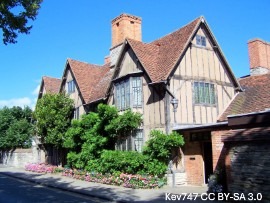
Stratford-upon-Avon home of Shakespeare's daughter is 'At Risk'
Lady Grange’s House repaired on St Kilda
.jpg)
National Trust for Scotland repairs stone cleit with link to famous island resident
Griff Rhys Jones on BBC Radio 4 Today programme
,_Green_Lane,_Derby.jpg)
The Victorian Society’s President unveiled its latest Top Ten Endangered Buildings 2026.
Need a MATE? Book your place now.
IHBC offers free webinars on applying for IHBC accreditation (Full & Associate).
UK Stained Glass Repository finds windows new homes

How are stained glass windows are rescued, stored and repurposed?
APPGEBE report sets high aims for quality
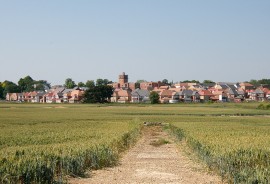
'Government must not sacrifice quality in drive to build 1.5m homes'
New measures protect Historic Shipwrecks from heritage crime

Underwater cultural heritage benefits from new HE guidance
How could the City of London skyline look in 6 years' time?

Visualisation shows approved planning applications as completed buildings
National Trust for Scotland calls for VAT cuts

Heritage neglect is encouraged by current policies
IHBC's 'Context' Issue 186 features Industrial Heritage

IHBC's members' journal reports on the challenges of conserving infrastructure
Book now for IHBC Annual School 2026

IHBC Annual School is taking place 18-20 June 2026 in Newcastle
RICHeS Research Infrastructure offers ‘Full Access Fund Call’
RICHeS offers a ‘Help’ webinar on 11 March
Latest IHBC Issue of Context features Roofing
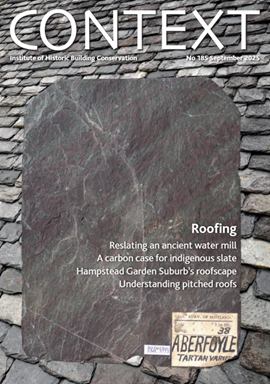
Articles range from slate to pitched roofs, and carbon impact to solar generation to roofscapes
Three reasons not to demolish Edinburgh’s Argyle House

Should 'Edinburgh's ugliest building' be saved?
IHBC’s 2025 Parliamentary Briefing...from Crafts in Crisis to Rubbish Retrofit
IHBC launches research-led ‘5 Commitments to Help Heritage Skills in Conservation’
How RDSAP 10.2 impacts EPC assessments in traditional buildings

Energy performance certificates (EPCs) tell us how energy efficient our buildings are, but the way these certificates are generated has changed.